Learn More
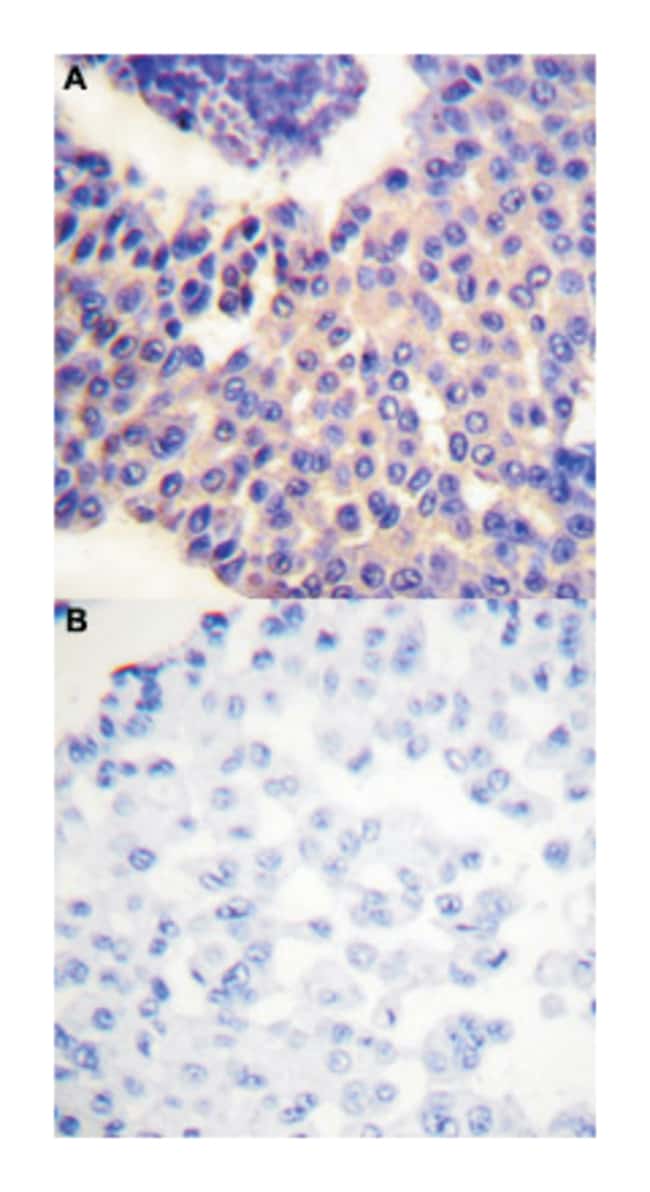

ARRB1 (phospho S412), Rabbit anti-Human, Mouse, Polyclonal Antibody, Abnova™
Description
Members of arrestin/beta-arrestin protein family are thought to participate in agonist-mediated desensitization of G-protein-coupled receptors and cause specific dampening of cellular responses to stimuli such as hormones, neurotransmitters, or sensory signals. Arrestin beta 1 is a cytosolic protein and acts as a cofactor in the beta-adrenergic receptor kinase (BARK) mediated desensitization of beta-adrenergic receptors. Besides the central nervous system, it is expressed at high levels in peripheral blood leukocytes, and thus the BARK/beta-arrestin system is believed to play a major role in regulating receptor-mediated immune functions. Alternatively spliced transcripts encoding different isoforms of arrestin beta 1 have been described, however, their exact functions are not known. [provided by RefSeq
Specifications
Specifications
| Antigen | ARRB1 |
| Applications | Immunohistochemistry (PFA fixed), Western Blot |
| Classification | Polyclonal |
| Conjugate | Unconjugated |
| Description | Rabbit polyclonal antibody raised against synthetic phosphopeptide of human ARRB1. |
| Dilution | Immunohistochemistry (1:50∼1:100) Western Blot (1:500∼1:1000) The optimal working dilution should be determined by the end user. |
| Formulation | In PBS (without mg2+ and Ca2+), 150mM NaCl, pH 7.4 (50% glycerol, 0.02% sodium azide) |
| Gene | ARRB1 |
| Gene Accession No. | P49407 |
| Gene Alias | ARB1/ARR1 |
| Show More |
For Research Use Only
By clicking Submit, you acknowledge that you may be contacted by Fisher Scientific in regards to the feedback you have provided in this form. We will not share your information for any other purposes. All contact information provided shall also be maintained in accordance with our Privacy Policy.