Learn More
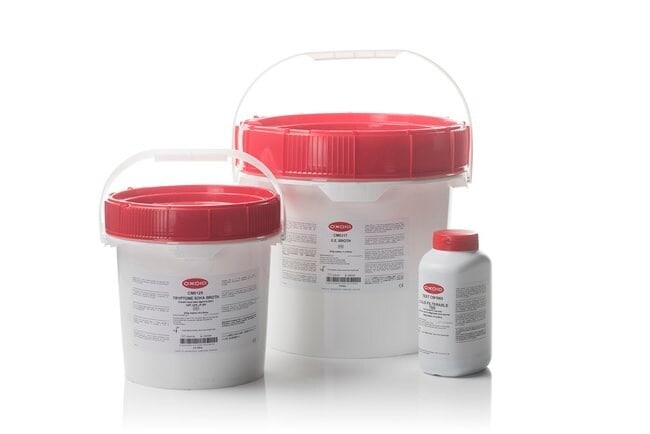

Thermo Scientific™ Brilliance UTI Medium
-

452.00 EUR
438.54 EUR / 400g
Save 13.46 EUR
2% Off
Log in to see stock.
Description
Urinary tract infection (UTI) occurs due to the presence and growth of microorganisms in the urinary tract, giving rise to a range of clinical presentations. Prominent human pathogens are often associated with UTIs, with the most common microorganism involved in urinary tract infections being E. coli, accounting for around 77% of isolates. Other microorganisms associated with acute, uncomplicated UTIs include Proteus mirabilis, Staphylococcus saprophyticus, other coagulase negative staphylococci, streptococci, and Candida species. Other microorganisms are associated with complicated UTIs, including Klebsiella, Enterobacter and Proteus species, Enterococcus species and Pseudomonas aeruginosa. Although S. aureus rarely causes infection, it is associated with renal abnormality, secondary infections to bacteraemia, surgery, and catheterisation. Other coagulase negative Staphylococci have been associated with complicated infections in individuals with abnormalities of the urinary tract or underlying disease.
Differentiation of the common microorganisms causing urinary tract infections (UTIs) is achieved through the inclusion of two chromogens that are targeted by specific enzymes: β-galactosidase and β- glucosidase. The action of these enzymes on the chromogens causes release of the coloured component inside the bacterial cell, resulting in coloured colonies. The colour produced depends on which enzymes the organisms produce. β-galactosidase is produced by E. coli, which grow as pink colonies. β- glucosidase is produced by enterococci which form blue or turquoise colonies. Cleavage of both chromogens by the KESC (Klebsiella, Enterobacter, Serratia, Citrobacter) group of coliforms gives dark blue or purple colonies. Tryptophan acts as an indicator of tryptophan deaminase activity (TDA), resulting in colonies of Proteus, Morganella and Providencia spp. with brown halos. Peptone forms the nutritional source within the medium.
Brilliance™ UTI Agar devices are used in a diagnostic workflow to aid clinicians in determining potential treatment options for patients suspected of having UTIs. The devices are for professional use only, are not automated and nor are they companion diagnostics.
Specifications
Specifications
| Form | Dehydrated Powder |
| Manufacturing Origin | United Kingdom |
| Sterility | Non-sterile |
| Target Organism Class | Bacterial Pathogens |
| Test Type | Microbial Differentiation |
By clicking Submit, you acknowledge that you may be contacted by Fisher Scientific in regards to the feedback you have provided in this form. We will not share your information for any other purposes. All contact information provided shall also be maintained in accordance with our Privacy Policy.