missing translation for 'onlineSavingsMsg'
Learn More
Learn More

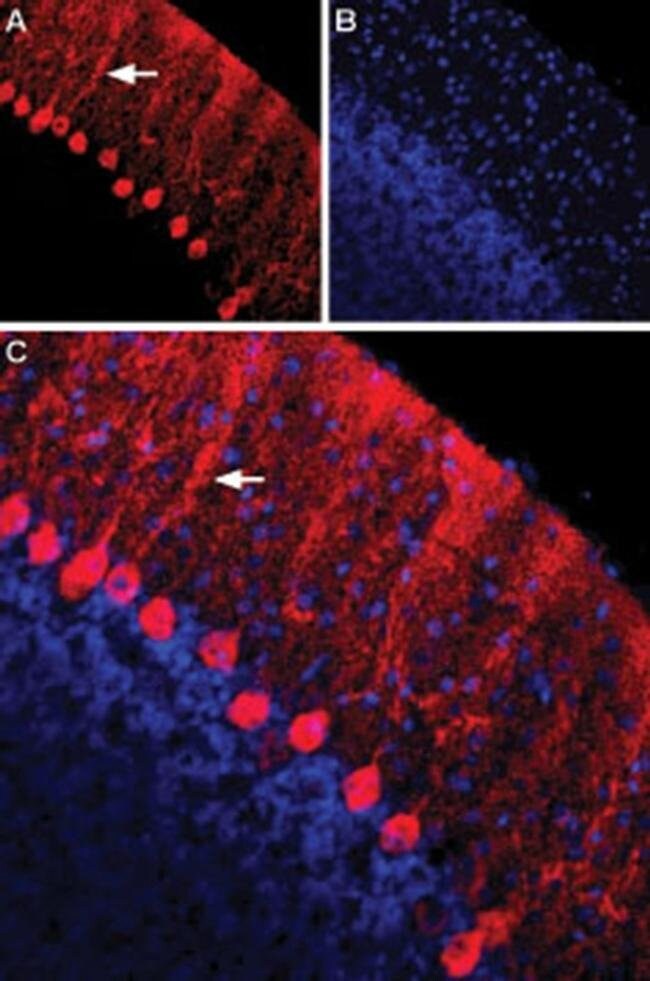
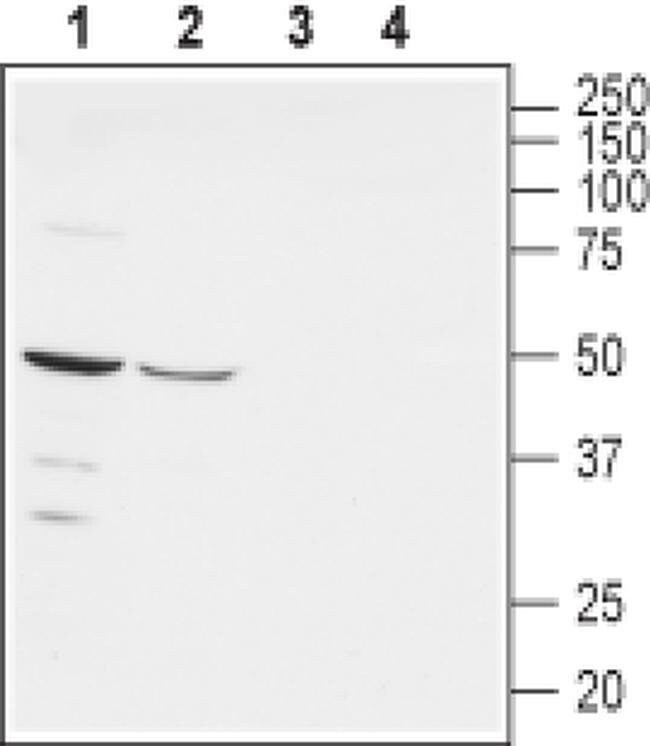
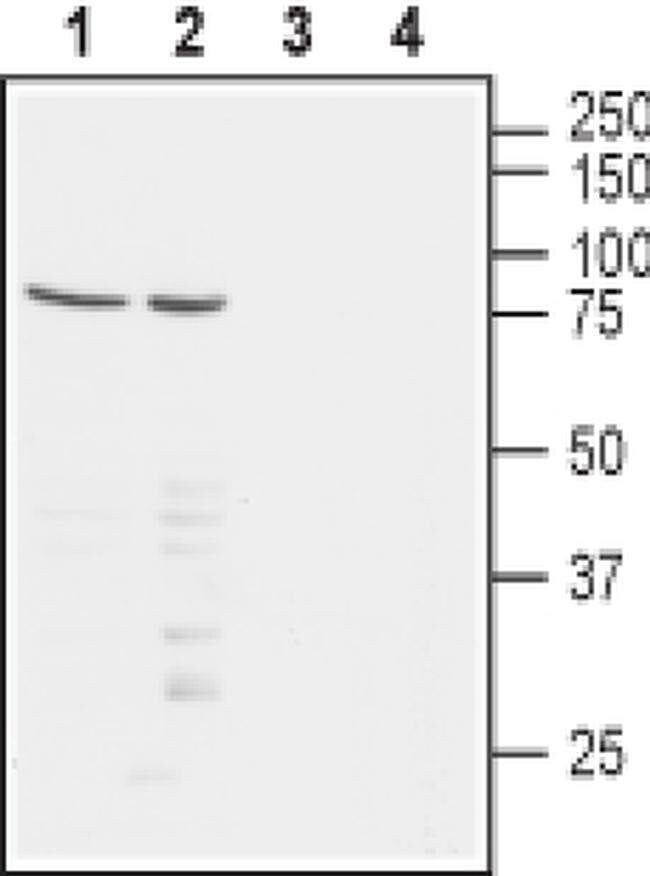
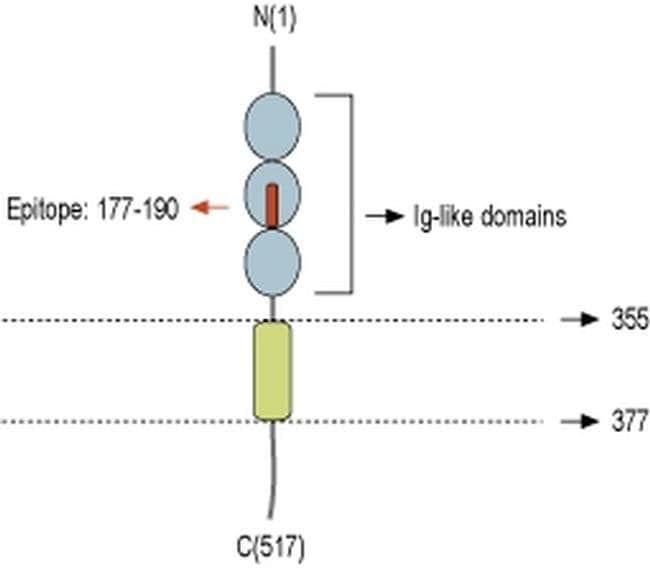
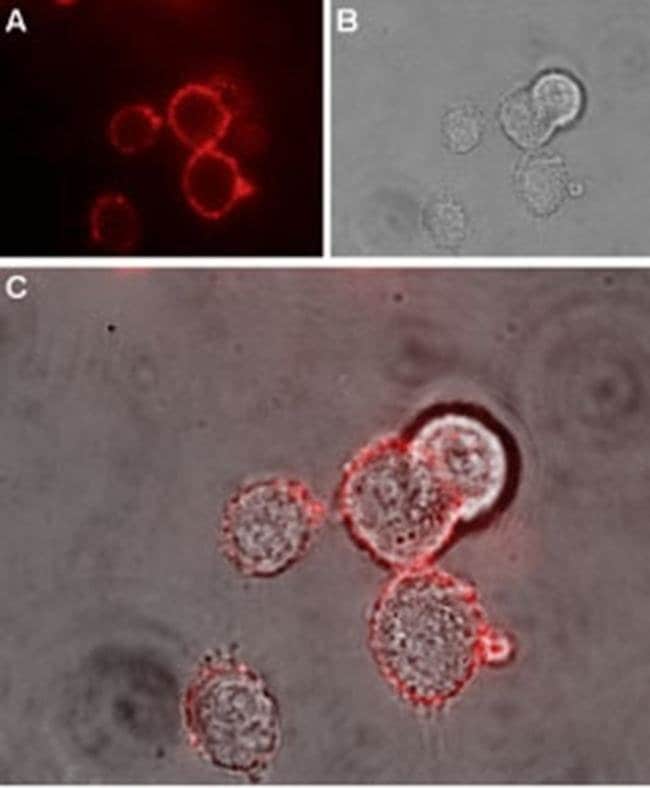
Nectin 1 (extracellular) Polyclonal Antibody, Invitrogen™
Description
Product is shipped at room temperature as a lyophilized powder and should be stored at -20C upon receipt. Reconstitute by adding 50 uL deionized water.
NECTIN1 is an adhesion protein that plays a role in the organization of adherens junctions and tight junctions in epithelial and endothelial cells. NECTIN1 is a calcium(2+)-independent cell-cell adhesion molecule that belongs to the immunoglobulin superfamily and has 3 extracellular immunoglobulin-like loops, a single transmembrane domain (in some isoforms), and a cytoplasmic region. NECTIN1 acts as a receptor for glycoprotein D (gD) of herpes simplex viruses 1 and 2 (HSV-1, HSV-2), and pseudorabies virus (PRV) and mediates viral entry into epithelial and neuronal cells. Further, NECTIN1 promotes cell-cell contacts by forming homophilic or heterophilic trans-dimers. Heterophilic interactions have been detected between NECTIN1 and NECTIN3, and between NECTIN1 and NECTIN4. NECTIN1 also has some neurite outgrowth-promoting activity. Mutations in the NECTIN1 gene cause cleft lip and palate/ectodermal dysplasia 1 syndrome (CLPED1) as well as non-syndromic cleft lip with or without cleft palate (CL/P). Alternative splicing of NECTIN1 results in multiple transcript variants encoding proteins with distinct C-termini. Diseases associated with NECTIN1 include Cleft Lip/Palate-Ectodermal Dysplasia Syndrome and Zlotogora Syndrome.

Specifications
Specifications
| Antigen | Nectin 1 (extracellular) |
| Applications | Flow Cytometry, Immunocytochemistry, Immunofluorescence, Immunohistochemistry, Western Blot |
| Classification | Polyclonal |
| Concentration | 0.8 mg/mL |
| Conjugate | Unconjugated |
| Formulation | PBS with 1% BSA and 0.05% sodium azide; pH 7.4 |
| Gene | NECTIN1 |
| Gene Accession No. | Q15223, Q9JKF6 |
| Gene Alias | Nectin-1 |
| Gene Symbols | Nectin1 |
| Show More |
Product Title
By clicking Submit, you acknowledge that you may be contacted by Fisher Scientific in regards to the feedback you have provided in this form. We will not share your information for any other purposes. All contact information provided shall also be maintained in accordance with our Privacy Policy.
Spot an opportunity for improvement?